
Guest Article from folotop.com.
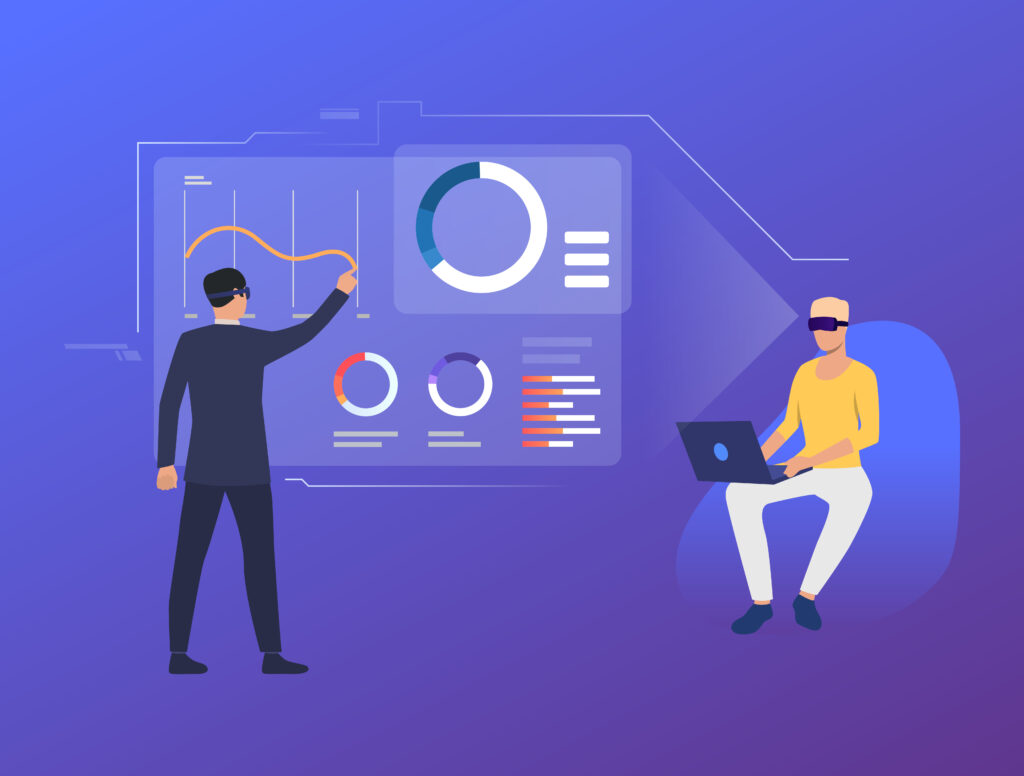
Let’s be clear for a moment. Today, most businesses have a mountain of data—and don’t know what to do with it. Sound like a familiar? You’ve got spreadsheets, sales reports, customer feedback, and website traffic—all this information coming in. And somewhere in all that noise there are answers that can help you grow. The catch? To find them is like looking for a needle in a haystack.
This is where AI-powered business analytics steps in. But for a second, forget the fancy tech speak. At the heart of it, AI analytics does one simple thing: it helps you understand your business better, faster, and without a PhD in data science.
We have been studying how companies in two very different markets—Brazil and Singapore—are leveraging these tools to drive real growth. Don’t just gather more data. Get really big. This is what I learned.
Why You Should Care About AI Analytics (Even If You’re Not a Tech Person)
We understand. AI and analytics sound like buzzwords that consultants use to sound clever. But here’s why ordinary business owners are beginning to pay attention.
Speed is more important than you think.
Let’s say you have an online store. One of your products starts selling really well. Or would you rather find out next week when you run your monthly report? Or do you want to know about it today so you can double your ad spend and ride the wave? AI analytics gives you real-time insights. This is not a small advantage. This is how small brands become big brands.
You don’t need to be a data nerd anymore.
The old way of doing analytics meant begging the one person in your company who knows SQL to run a query for you. Then waiting three days. Then getting a spreadsheet with 10,000 rows that you couldn’t make sense of. Modern AI tools let you type a plain English question like “Which customers are most likely to leave next month?” and get an answer instantly. No coding required.
You can stop guessing and start knowing.
Most business decisions rely on instinct. And sometimes gut feeling is right. But wouldn’t you rather know? AI can look at your past sales, your customer behavior, and market trends to tell you what’s likely to happen next. It doesn’t predict the future. But it’s a lot better than crossing your fingers and hoping.
Brazil: Where Analytics Has to Work Around Chaos (And Does)
Brazil is no easy market. Anyone who has done business there will tell you the same. The data are messy. The rules are complex. The country is huge, and what works in Sao Paulo may not work in Recife.” And, oh, everything has to be in Portuguese. Not European Portuguese, but Brazilian Portuguese, with all its slang, regionalisms, and quirks of culture.
But Brazilian businesses are ingenious. And the successful AI analytics platforms are the ones that understood one simple truth: you can’t simply take a global tool, translate the menus into Portuguese, and call it a day.
This is Trakto.”It is for others.”
The majority of analytics tools are developed for big corporations with big budgets and big teams. “What about the small and medium businesses?” Trakto said. You know, the bakery owner, who wants to know what sells best on weekends. The online shop owner must manage inventory over three marketplaces. The family restaurant chain is trying to find out why Tuesday nights are dead.
With Trakto, you can ask questions in plain language. “Best-selling products last month in the northern region.” And it’s obvious. No data team needed. That’s why small business owners in Brazil actually use it, not just pay for it and let it collect dust.”
Zeev knows Brazilian chaos.
If you’ve ever dealt with Brazilian taxes, you know what I mean. The system is incredibly complex. Labor laws vary by region. Logistics are a nightmare because the country is massive. Zeev was built by people who have the country’s sizeTheir platform analyzes your workflows and finds the bottlenecks—not in theory, but in actual Brazilian business conditions.
A logistics company using Zeev discovered it had a packed warehouse in São Paulo and a half-empty facility in Belo Horizonte. They reorganized the work and cut delivery times by 30%. That’s not magic. “Just good analytics solving a real problem.”
Brazilian sales win for PipeRun;
Selling B2B in Brazil is not like selling in the US or Europe. Relationships matter a lot more. Deals drag out. Regional economic differences mean that you have to have a different pricing strategy for each market. PipeRun trained its AI on real Brazilian sales cycles, not generic models from Silicon Valley.
It can read your sales team’s Portuguese emails and call transcripts to determine which deals are actually likely to close. Sales managers we have talked to say it’s like having a senior sales coach watching every rep’s performance and offering advice as it happens. That’s a powerful thing.
Stilingue speaks Brazilian Portuguese like a native.
This one is fascinating. Most AI language models are trained on formal, neutral Portuguese. But Brazilians don’t talk like textbooks. They use slang. They’re sarcastic. They have inside jokes that vary by state. Stilingue’s NLP (natural language processing) actually understands sarcasm.
This is a game changer for brands tracking social media. A generic tool might completely miss the negative sentiment if someone tweets sarcasm about your product. Stilingue lo raccoglie. And with a brewing crisis, real-time alerts help you react before it blows up. In Brazil’s social-media-obsessed culture, that can save your reputation.
Data Rudder clears the mess.
Here’s a secret analytics vendors won’t tell you: most of the work isn’t analysis. It’s structuring your data so it can be analyzed. “Brazilian companies often have data in old systems, new cloud apps, and everything in between. CNPJ numbers come in different formats. Clean up messy address fields. PIX transaction data in standardization.
Data Rudder handles the work for you. It validates Brazilian formats, removes duplicates, and prepares your data for analysis in the real world. It’s not high-profile. But without it nothing else will work.
Singapore: Where Analytics Means Serious Scale
Singapore is nearly the antithesis of Brazil in every way. Little country. World-class infrastructure Highly skilled workforce. The business language is English. And the government is actively pushing a “Smart Nation” agenda of digital transformation.
But here’s the thing: Singapore’s businesses face a different set of challenges. They’re often regional headquarters for multinational corporations. That means they need analytics platforms that can handle massive scale, integrate with global systems, and satisfy strict regulatory requirements.
Tableau tells stories with data.
You know how some people can look at a spreadsheet full of numbers and see the story? Tableau does that for all. Its visualizations are really good at making charts and graphs that actually mean something out of complicated data.
I watched a logistics manager in Singapore use Tableau to demonstrate to his team why delivery times were slipping. One chart, five minutes of explanation, and everybody understood the problem and the solution. That’s the magic of a powerful visualization. It’s not about making pretty pictures. It’s about creating a common understanding of the facts in the room.”
Power BI is everywhere for a reason.
If your company uses Microsoft products—and let’s be honest, most do—Power BI just works. It plugs right into Excel, Teams, and Azure. The learning curve is gentle. And the price is reasonable enough that small businesses can afford it.
Singapore’s government agencies love Power BI because of its security features. Banks and insurance companies use it because they trust Microsoft’s compliance certifications. And regular employees use it because it doesn’t require them to learn a whole new system. Sometimes the best tool is the one your team will actually use.
Qlik Sense lets you explore freely.
Most analytics tools force you to ask specific questions. You say, “Show me sales by region,” and it shows you sales by region. But what if the interesting insight is hiding somewhere you didn’t think to look?
Qlik’s associative engine lets you wander through your data. You click on a data point, and the whole dashboard updates to show you connections you might have missed. It’s like exploring a new city without a map. You might discover something amazing. Or you might get lost. But for analysts who love discovery, it’s the most exciting tool on the market.
ThoughtSpot works like Google.
Ask a question. That’s the whole philosophy behind ThoughtSpot. “Show me the top 10 customers by revenue.” Boom. “What products had the highest return rate last quarter?” Boom. “Forecast our sales next month. Boom.
That speed is addictive for busy executives in Singapore’s fast-moving financial and tech sectors. You don’t have to wait for a weekly report. No need to email the analytics team. You ask a question, and the answer pops up. It’s like magic, but it’s just really good engineering.
Alteryx is for the real data folks.
Okay, I’ll be frank. Alteryx is not for all. The software is for data analysts and data scientists who need to do complex preparation, blending, and predictive modeling. If you don’t know what those words mean, Alteryx probably isn’t for you.
But for the banks, insurance companies, and consulting firms that dominate Singapore’s business landscape, Alteryx is a must-have. It takes tasks that used to take days and crams them into hours. And in industries where time is literally money, that’s a major competitive advantage.
How to Properly Choose a Platform (Without Losing Your Mind)
We have talked to many business owners who get paralyzed by choice. There are so many platforms. They all sound like they could work. How do you decide?
First, be honest about your team’s skills.
If you don’t have a data scientist on staff (most companies don’t), don’t buy a tool that requires one. You’ll never use it. Look for platforms with intuitive interfaces, natural language queries, and good customer support. Trakto in Brazil or ThoughtSpot in Singapore are excellent examples.
If you do have a skilled analytics team, give them powerful tools like Alteryx or Data Rudder. They’ll thank you.
Second, look at what you already use.
If your company runs on Microsoft, get Power BI. If Salesforce is your home, then Tableau’s CRM Analytics is a natural fit. In Brazil, make sure whatever you choose connects to your local payment gateways, e-commerce platforms, and accounting software. There’s nothing worse than buying a tool that doesn’t talk to your other tools.
Third, start small.
You don’t need to roll out a platform to your entire company on day one. Pick one team, one department, and one specific problem. Run a pilot for 60 days. See if it actually helps. If it does, expand. If it doesn’t, try something else. This is not a marriage. You’re allowed to change your mind.
Fourth, calculate the real cost.
The subscription fee is just the beginning. You’ll also pay for data ingestion, integration work, training, and ongoing support. Ask vendors for all-in pricing. And budget for the time your team will need to learn the tool. The cheapest platform that nobody uses is actually the most expensive.
Where Things Are Headed
The gap between companies using AI analytics and those that aren’t is growing fast. The AI tools aren’t a miracle. It’s that they let you make better decisions faster.” And in business, speed and accuracy multiply over time.
The next few years, real-time analytics for PIX payments (which are everywhere now), AI models to understand Brazil’s diverse regional consumer behaviors, and further integration with agribusiness sensors will be on the horizon in Brazil. The platforms who get these local needs right will win.
Expect more emphasis in Singapore on “explainable AI” (so banks can trust the model’s recommendations), edge analytics for factories and warehouses, and tools that can operate across the region without needing to centralize sensitive data.
The message for you, as a business leader, is simple: don’t wait. Choose a platform. Do a pilot. See what works. Make adjustments as you go. Better done than perfect.
Ready to Dive Deeper, Keen
If you are keen to explore the specific platforms available in each market, including detailed breakdowns of their features, pricing, and ideal customers, check out these comprehensive guides:
View the Top 5 AI-Powered Business Analytics Platforms in Brazil
View the Top 5 AI-Powered Business Analytics Platforms in Singapore
These resources will help you match your specific business goals to the right tool. Whether you’re a small shop in São Paulo just starting with analytics or a regional director in Singapore evaluating enterprise solutions, there’s a platform for you.
The data is already sitting there, waiting to tell you something useful. You just need the right tool to listen.